






By Shingirai Vambe
A new chapter in Southern Africa’s media landscape has begun, with veteran Zimbabwean journalist Loughty Dube elected as the inaugural Chairperson of the newly established Southern African Press Councils Association (SAPC).
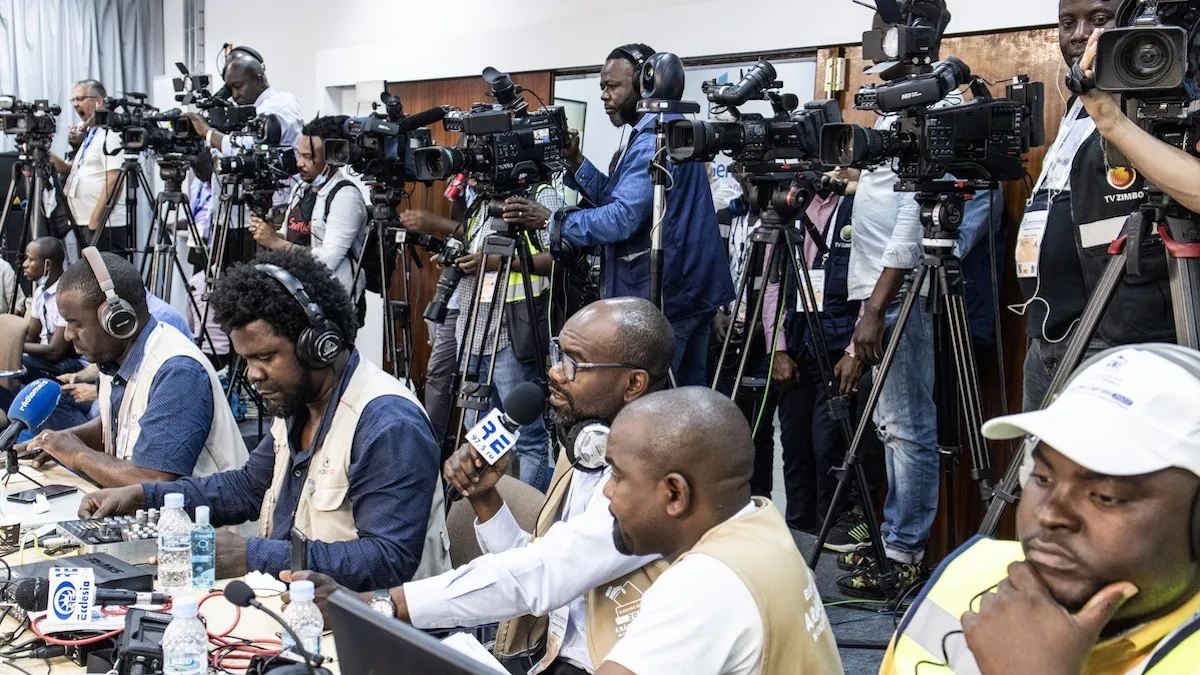
The landmark election took place in Lusaka during the organisation’s inaugural meeting, bringing together press councils and media self-regulatory institutions from across the region. The gathering marked a decisive shift toward deeper regional cooperation on media accountability, ethical journalism, and the protection of press freedom, issues that have increasingly come under strain in recent years.
Dube will be deputised by Phathiswa Magopeni, Executive Director of the Press Council of South Africa, alongside Mbongeni Mbingo of Eswatini. The trio forms the first leadership structure tasked with laying the institutional foundation of SAPC and steering its vision into practical implementation.
The formation of SAPC follows the adoption of the Zambia Declaration, a framework that defines the body’s mandate and long-term objectives. Founding members include the Press Council of South Africa, the Voluntary Media Council of Zimbabwe (VMCZ), the Media Ombudsman of Namibia, the Zambia Media Self-Regulation Council, and the Media Council of Malawi, among others. Collectively, these institutions represent a unified commitment to strengthening ethical standards and reinforcing professional conduct within the media sector.
For Zimbabwe, Dube’s election is more than a personal milestone, it signals the country’s growing influence in shaping regional media governance. In his acceptance remarks, Dube described the appointment as both an honour and a reflection of Zimbabwe’s strides in advancing voluntary media self-regulation.
“This is not just about me,” he said. “It is recognition of the work that has been done over the years in strengthening self-regulation and upholding professional standards. It also positions Zimbabwe as a key contributor to regional media development.”
Dube underscored that SAPC’s core mission is to reinforce self-regulation systems anchored on ethical journalism, transparency, and accountability. He noted that this vision aligns with the policy direction being pursued under Emmerson Mnangagwa, who has advocated for a co-regulation framework, an approach that balances independent media self-regulation with statutory oversight.
“Co-regulation is about balance,” Dube explained. “It ensures that the media remains free and independent while also being accountable to the public. SAPC is not about control, it is about strengthening credibility. If the media can regulate itself effectively, there is less need for heavy-handed statutory intervention, which can threaten press freedom.”
At a time when misinformation and declining public trust continue to undermine journalism globally, SAPC is expected to play a pivotal role in restoring confidence in the media. Dube highlighted the organisation’s commitment to promoting common ethical standards, strengthening fact-checking collaborations, and improving complaints-handling mechanisms across member states.
“Misinformation is one of the biggest threats to both democracy and journalism today,” he said. “Rebuilding public trust requires consistency, openness, and accountability. SAPC will serve as a platform where media institutions collectively reaffirm their commitment to truth, accuracy, and fairness.”
Beyond ethics and accountability, the regional body is also expected to engage key institutions such as the Southern African Development Community (SADC) and the African Union (AU) to mainstream media development within broader governance and democratic frameworks. Through such partnerships, SAPC aims to advocate for enabling policy environments, align media standards with regional benchmarks, and mobilize technical and financial support for media initiatives.
Dube emphasized that SAPC’s long-term success will hinge on its ability to foster collaboration, peer learning, and shared accountability across borders. He noted that the regional framework would allow countries like Zimbabwe to benchmark their media systems against best practices while contributing their own experiences to the collective pool.
“Accountability must not be imposed, it must be owned by the media itself,” he said. “This platform strengthens that principle by encouraging consistency, professionalism, and public confidence.”
Looking ahead, Dube outlined an ambitious roadmap for his tenure. At the regional level, priorities include establishing SAPC as a credible and functional institution, harmonizing ethical standards, and building capacity among media practitioners and regulatory bodies. Sustainable funding models for self-regulation systems will also be a key focus area.
On the domestic front, he stressed the need to enhance public awareness of media complaints mechanisms, improve accessibility, and elevate professional standards within Zimbabwe’s media industry. He also aims to position Zimbabwe as a leader in media self-regulation best practices while fostering stronger collaboration between the media, regulators, and the public.
“Ultimately, my role is not to impose direction, but to facilitate progress,” Dube said. “We want a media ecosystem that is credible, accountable, and trusted, not just in Zimbabwe, but across Southern Africa.”
The establishment of SAPC comes at a critical time for the region’s media sector, which continues to grapple with evolving challenges ranging from digital disruption to political pressures. Yet, with a renewed commitment to ethical journalism and regional solidarity, the new body represents a bold step toward safeguarding the integrity and future of the profession.



More Stories
Marital Feud Escalates Into Gun Drama in Rusape
Zimbabwe’s Export Engine Fires Up
Southern Africa Rethinks Energy Security as Zimbabwe Pushes Regional Power Integration