





By Shingirai Vambe
For many Zimbabweans, The Church of Jesus Christ of the Latter-day Saints remains a faith that is spoken about more than it is understood. Its style of worship, sacred spaces, and quiet approach to religious life have often sparked curiosity, speculation, and, at times, misunderstanding. It was against this backdrop that the church recently opened its doors to the media, offering a rare opportunity for journalists to step inside and learn, firsthand, about a place regarded by its members as deeply sacred.
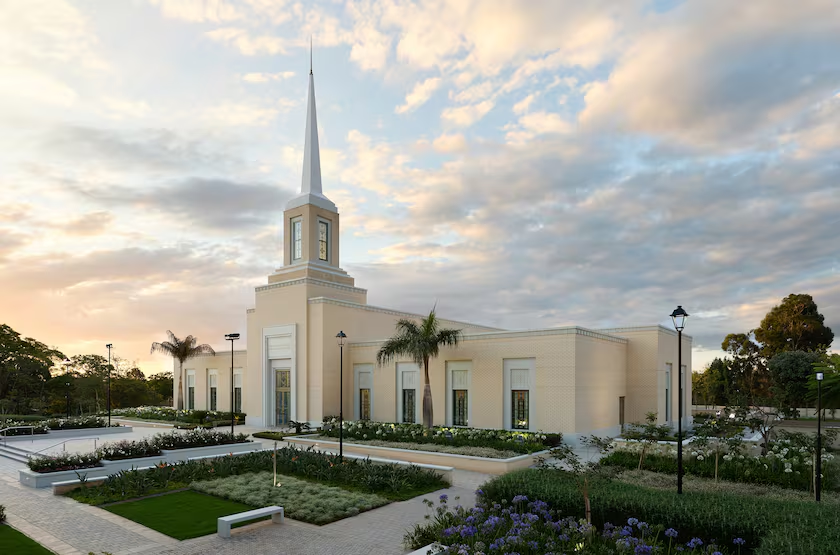
A few days ago, local media practitioners were invited on a guided tour of the church’s newly completed and yet to be dedicated house of worship in Harare. The tour marked an important moment not only for the church’s members, but also for the broader public, many of whom had only seen the structure from behind its perimeter walls. The building will be formally dedicated soon, a ceremony that, in the faith’s tradition, sets the space apart exclusively for worship and spiritual ordinances.
The church is situated in Newlands, one of Harare’s affluent suburbs, its calm and carefully maintained surroundings reflecting the emphasis the faith places on order, reverence, and reflection. Church officials explained that the facility forms part of a global network of thousands of similar houses of worship built by the church across the world, serving a worldwide membership that now runs into the tens of millions.
For Zimbabwean members, the new church represents more than bricks and mortar. For years, many had been compelled to travel long distances, often to neighbouring South Africa, to access certain forms of worship central to their faith. The opening of the Harare church significantly eases that burden, allowing local members to worship closer to home, strengthening families and community ties while reducing the financial and logistical strain associated with cross-border travel.

Beyond worship, The Church of Jesus Christ of the Latter-day Saints is widely recognised for its humanitarian footprint, much of which is quietly implemented through partnerships with registered organisations and government institutions. In Zimbabwe, these efforts have translated into tangible support in critical social sectors. Over the years, the church has been involved in the construction and support of schools and health facilities, contributing to improved access to education and basic healthcare services.
Food aid programmes supported by the church have also played a role in cushioning vulnerable communities during periods of economic hardship and climatic stress. These initiatives have complemented national efforts to address food insecurity, particularly among school-going children and expectant mothers, groups consistently identified as most at risk during times of crisis.
Importantly, church leaders emphasised that humanitarian work runs parallel to, rather than in place of, the church’s global missionary activities. While the faith continues to spread its religious teachings across the world, its leaders maintain that service to humanity remains a core expression of belief, regardless of one’s religious affiliation.
Speaking to The Post On Sunday during the tour, church elders expressed gratitude to the Government of Zimbabwe for what they described as a constructive and respectful working relationship. They acknowledged state support and cooperation in various projects that have directly benefited communities, noting that such partnerships have helped ensure assistance reaches those who need it most.
As Zimbabwe continues to navigate social and economic challenges, the opening of the church’s new house of worship in Harare adds another layer to the country’s diverse religious landscape. More significantly, the media tour offered a moment of openness, an invitation to move beyond assumptions and to understand a faith community that, while often quiet, has steadily woven itself into the fabric of Zimbabwean society through worship, service, and partnership.




More Stories
Retrenchment Axe Hangs Over TelOne
Zimbabwe’s Export Engine Fires Up
Southern Africa Rethinks Energy Security as Zimbabwe Pushes Regional Power Integration