





When the State Turns on Its Own:
By Senior Reporter
For many Zimbabweans, the relationship between the citizen and the State has remained one of the most complicated legacies of the country’s post-independence history.
For those who lived through colonial rule, independence in 1980 was expected to represent more than the transfer of political power from one administration to another. It was supposed to mark the beginning of a fundamentally different relationship between government and the governed, a Zimbabwe in which citizens would no longer live in fear of the State, where security institutions would protect rather than intimidate, and where political disagreement would be recognised as an essential component of nation-building.
But more than four decades after independence, critics argue that some of the methods associated with the colonial security State have survived, been adapted and, at different points in the country’s history, deployed by the very institutions created to defend the independent republic.
That contradiction has become increasingly difficult to ignore.
Zimbabwe’s liberation struggle was fought against a system in which political power, security institutions and coercive authority were used to suppress dissent and maintain control.
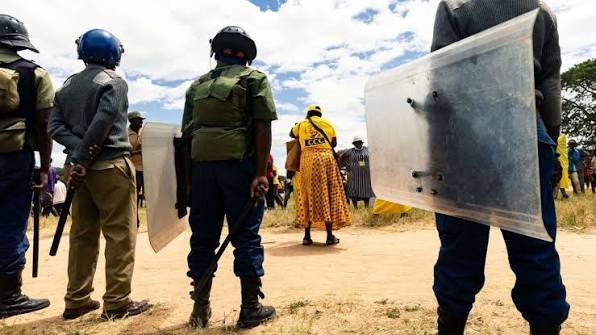
Yet the post-independence political landscape has itself been marked by allegations of political violence, intimidation, arrests, surveillance and restrictions against citizens perceived to be challenging those in power.
For ordinary Zimbabweans, political disagreement has at times carried consequences far beyond the ballot box.
Opposition activists have been arrested. Political gatherings have been disrupted. Citizens have reported intimidation. Journalists have faced harassment. Families have lost property or livelihoods amid politically charged disputes. Some individuals have alleged torture or other forms of abuse while in custody.
The consequence has been the gradual development of a political culture in which disagreement can be interpreted as disloyalty and criticism of government can be portrayed as hostility towards the State.
Now, in a development that has generated strong reactions among Zimbabweans, the debate over the country’s political culture has acquired another dimension, the alleged targeting of people who once formed part of the State’s own security establishment.
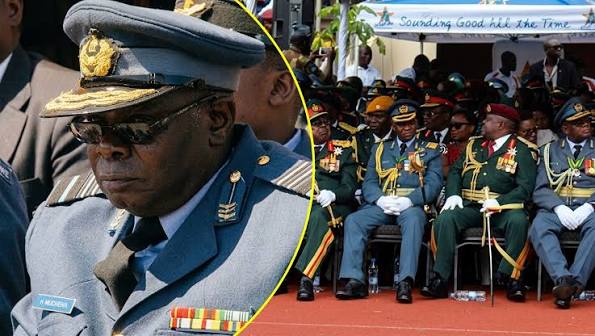
At the centre of the latest controversy is retired Air Marshal Henry Muchena, whose treatment has been publicly criticised by retired Lieutenant General Winston Sigauke Mapuranga, a war veteran and former senior military officer.
Mapuranga has issued a strongly worded statement accusing State security officers of following and intimidating Muchena and his wife.
The allegations have not, however, been independently established, and the authorities would have an opportunity to respond to the claims.
But regardless of the outcome of the allegations, the statement has reopened a much larger question that Zimbabwe has grappled with for decades, What happens when the institutions established to protect the State are perceived to be turning their attention towards those who once served within them?
Mapuranga’s intervention is particularly striking because it comes from within the military establishment itself.
“I have spent decades in uniform defending a Zimbabwe I believed in,” Mapuranga said in his statement. “I have watched governments rise and I have watched them rot. I have held my tongue when discretion demanded it. I am holding it no longer.”
His intervention is not simply a defence of one retired officer.
It is an expression of concern over what he describes as a broader deterioration in the relationship between political authority, security institutions and citizens.
According to Mapuranga, Muchena and his wife have been subjected to surveillance by State security officers for several days.
He says visual material showing the alleged surveillance has been made available to the media.
The claims come against the backdrop of a contentious political debate over Constitutional Amendment Bill No. 3, which has become one of the most politically divisive proposed constitutional changes in Zimbabwe in recent years.
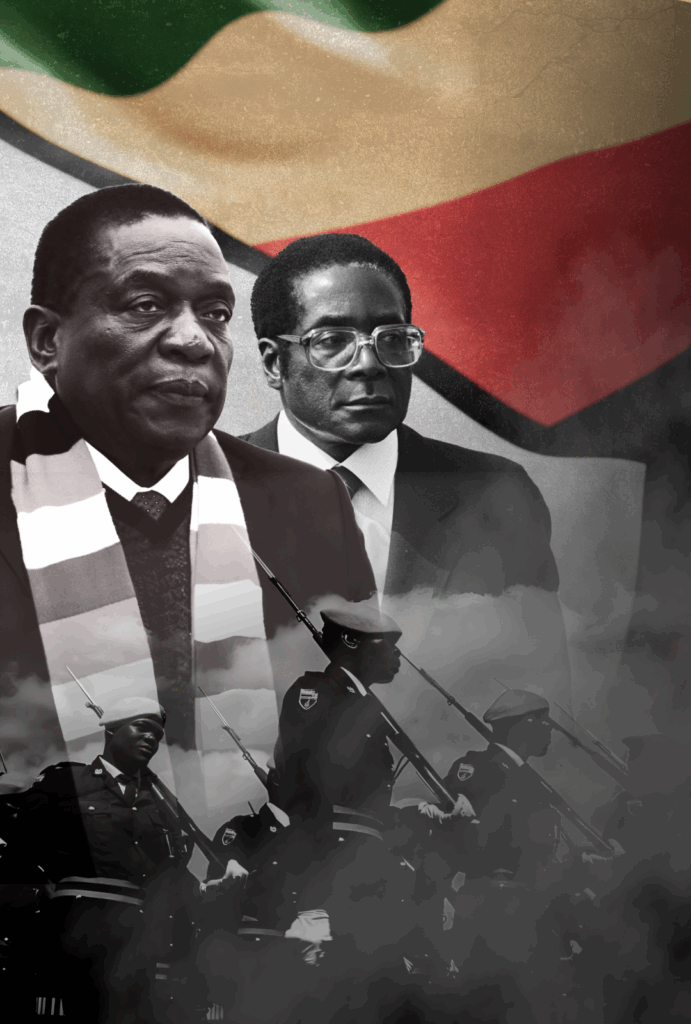
Muchena, according to Mapuranga, was among retired generals and former senior civil servants who met President Emmerson Mnangagwa to express their opposition to the proposed constitutional amendments.
The meeting, Mapuranga says, was approached in good faith by people who believed that their history of service to the country gave them both a responsibility and a right to express their concerns about the direction of constitutional reform.
The meeting, according to the account, did not end with agreement.
Instead, Mapuranga says, the President abruptly brought the engagement to an end with the words, “Whoever wins, let them win.”
For Mapuranga, those words represented more than a dismissal of a group of retired officials. He interpreted them as symptomatic of a deeper contest over the meaning of constitutionalism, political power and the limits of executive authority. And it is at this point that the story moves beyond the individual case of Muchena.
It enters the much larger and unresolved question of whether Zimbabwe’s institutions have sufficiently moved away from the politics of fear that characterised some of the country’s darkest periods.
The irony, Mapuranga argues, is difficult to ignore. Muchena was part of a generation that went to war to liberate Zimbabwe.
The men and women who joined the liberation struggle did so with the expectation that political independence would fundamentally transform the lives of the people for whom they were fighting.
After independence, former liberation fighters became part of the institutions of the new State.
Some joined the armed forces. Others entered politics, government and public administration. They helped construct the institutions of independent Zimbabwe and became custodians of the country’s sovereignty. Yet, according to Mapuranga, a man who once helped defend that State now finds himself allegedly being watched and intimidated by elements of the same security machinery.
“He fought to free Zimbabwe, only to find himself being persecuted by the very State he helped create,” Mapuranga said.
That claim, if substantiated, would raise serious questions about the boundaries between legitimate national security operations and political intimidation.
But it also illustrates a broader problem. In a democracy, security institutions are expected to operate within the law and remain accountable to constitutional authority. They are not supposed to determine who is politically acceptable. They are not supposed to punish citizens for their opinions. And they should not become instruments for settling political disagreements.
The Constitution, rather than political allegiance, is supposed to be the ultimate reference point.
Mapuranga’s most powerful argument is perhaps not about the retired Air Marshal himself. It is about what the alleged treatment of a senior former military officer would mean for an ordinary Zimbabwean.
“If a whole General can be hunted like this, surveilled, followed, intimidated in his own country, what of an ordinary citizen?” he asks.
It is a question that resonates beyond the military establishment. What happens to a teacher in Murewa who openly disagrees with government policy? What happens to a vendor in Mbare who criticises a political decision? What happens to a student in Mutare who organises a peaceful demonstration? What happens to a journalist who investigates a powerful institution? And what happens to an opposition supporter who simply wants to vote for a different political party?
These are not hypothetical questions in a country with a long history of political contestation. The ability to disagree without fear is one of the clearest measures of the health of a democracy. A government does not demonstrate strength by ensuring that everyone agrees with it. It demonstrates strength by creating institutions capable of absorbing disagreement without resorting to intimidation.
At the heart of the current dispute is Constitutional Amendment Bill No. 3, supporters of the proposed amendments argue that the legislation introduces reforms intended to improve governance, strengthen institutions, enhance parliamentary representation and address weaknesses in the electoral and constitutional framework.
Critics, however, have focused heavily on provisions affecting the presidency and elections.
Among the most controversial proposals is the extension of presidential and parliamentary terms from five to seven years and a proposed change to the manner in which the President is elected.
Opponents argue that such changes risk weakening direct electoral accountability and creating an institutional framework that could allow those already in power to remain there for longer.
Supporters reject that interpretation and maintain that the amendments are intended to strengthen stability and improve the country’s governance architecture.
The debate therefore goes to the heart of constitutional democracy. A constitution is not merely a collection of legal provisions. It is the framework through which political power is restrained. It establishes the rules governing how leaders are elected, how long they remain in office, how institutions exercise authority and how citizens are protected from the abuse of power. That is why constitutional amendments are expected to receive greater scrutiny than ordinary legislation.
The more fundamental the proposed change, the greater the need for transparency, public participation and institutional independence.
Mapuranga’s message to serving members of the security services is therefore unusually direct. He argues that officers swear an oath to the Constitution and the Republic, rather than to an individual political leader or faction.
“You swore an oath to the Constitution, not to a man,” he said.
The statement goes to the fundamental principle of civilian and constitutional control of security institutions. The military, police and intelligence services belong to the State, but the State itself belongs to the people. Political leaders are temporary custodians of public authority.
They do not own the institutions they control. That distinction becomes particularly important when political disagreements become intense. Security institutions must remain professional regardless of which political party controls government. They must protect the constitutional order rather than a particular political outcome. And citizens must have confidence that their political opinions will not expose them to reprisals.
Zimbabwe’s political history makes these concerns particularly sensitive. The country has witnessed periods in which political violence became deeply entrenched in communities. Families were divided along political lines. Communities were punished because of perceived political allegiance. Opposition supporters and activists were arrested. Some citizens lost homes and livelihoods. Others fled the country.
The fear created during those periods did not disappear simply because elections were held or governments changed. Fear has a long memory. It is passed from parents to children. It becomes part of community conversations. It influences whether people attend political meetings, whether they speak openly and whether they are willing to challenge authority.
This is why allegations of surveillance or political intimidation involving a retired military officer can resonate so strongly. They evoke a much larger national memory. And they raise the uncomfortable possibility that the country’s political culture has not fully escaped the methods of the past.
Yet there is another danger.
Transform Zimbabwe Leader, Jacob Ngarivhume told this publication that, Zimbabwe cannot build a democratic future by simply changing who gets to wield fear.
“If yesterday’s victims become tomorrow’s intimidators, the cycle remains intact. If a government that once suffered political repression responds by practising repression against its opponents, then the country has not achieved political transformation. It has merely changed the identity of the people holding power”.
“That is why the debate should not be reduced to whether Muchena is politically sympathetic to the Government or opposed to it.The fundamental question should be whether a Zimbabwean, retired general or ordinary citizen, can express a political opinion without being threatened, intimidated or subjected to unlawful surveillance, that is the democratic test,” Ngarivhume said.
“Zimbabwe’s liberation struggle promised political freedom, but political freedom cannot end with the removal of colonial rule,it must also mean freedom from arbitrary State power, it must mean that citizens can criticise government, it must mean that opposition parties can organise, It must mean that journalists can investigate, it must mean that judges can make decisions without fear, It must mean that security officers understand that their ultimate loyalty is to the Constitution and it must mean that political leaders accept that they can lose,” said former Mbizo legislator, Settlement Chikwinya.
Mapuranga’s reference to President Mnangagwa’s reported words, “Whoever wins, let them win”, therefore carries a significance beyond the meeting in which they were allegedly spoken.
In a democracy, someone must win and someone must lose. The legitimacy of the system comes from ensuring that both sides accept the outcome because they trust the rules. The State’s responsibility is not to guarantee victory for one side, it is to guarantee that the contest is fair.
“The Second Republic was introduced with promises of political and economic renewal. It was presented as an opportunity to rebuild institutions, attract investment, reform governance and create a different relationship between citizens and the State. But institutions cannot be rebuilt merely through new slogans.” added Sigauke.
They are rebuilt through conduct, the test of political reform is not whether government supporters feel safe. It is whether critics feel equally safe. The test of constitutionalism is not whether leaders can exercise power. It is whether institutions can restrain that power.
And the test of independence is not simply whether Zimbabwe is free from foreign rule. It is whether Zimbabweans are free from fear of their own government. The allegations surrounding Muchena must therefore be properly investigated rather than decided in the court of social media.
If surveillance occurred, the responsible institutions should explain why.
If it did not occur, the Government should say so clearly.
If security agencies acted lawfully, the legal basis should be established.
And if citizens were unlawfully targeted because of their political views, those responsible should be held accountable.
Anything less will deepen public suspicion.
Zimbabwe has spent decades attempting to escape the politics of fear. It cannot afford to reproduce that culture under a different generation of leaders. The country belongs neither to the Government nor to the opposition. It belongs to its citizens. Those who fought for independence did not fight to create a State that would simply replace one form of political domination with another.
They fought for a republic in which power would ultimately belong to the people.
“The greatest tribute Zimbabwe can therefore pay to its liberation generation is not to preserve their political privileges. It is to preserve the principles of freedom for which they say they fought. And perhaps that is the central question confronting the country today, Zimbabwe’s future will not be secured by silence. It will be secured when disagreement becomes normal, institutions become stronger than individuals, and no citizen, regardless of rank, political affiliation or history, has to look over their shoulder simply because they dared to speak.” remarked Retired Lieutenant General Winston Sigauke Mapuranga.



More Stories
Marital Feud Escalates Into Gun Drama in Rusape
AHF calls for African countries to unite against debt crisis
Pensioners Left Waiting As Billions Sit In Zimbabwe’s Pension Funds