




By Shingirai Vambe
Zimbabwe has been plunged into mourning once again after a horrific road traffic accident claimed the lives of 27 people and injured seven others near Chivhu, barely days after the country was shaken by another major tragedy on Lake Kariba.
The latest crash has reopened difficult questions about road safety, passenger transport, enforcement, vehicle overloading, dangerous driving and, increasingly, the extent to which ordinary passengers are financially protected when disaster strikes.
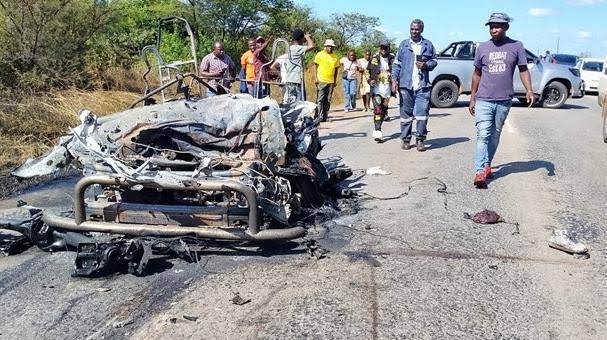
The Friday night accident occurred along the Harare-Masvingo highway, about 15 kilometres south of Chivhu near Makumimavi Primary School, when a Nissan Caravan NV350 commuter omnibus collided head-on with a Volvo haulage truck.
According to the Zimbabwe Republic Police, the accident occurred at approximately 8.30pm.
The commuter omnibus was carrying members of the African Apostolic Church (Mwazha), who were travelling from Dema to Mvuma for a church conference.
Police said preliminary investigations indicated that the foreign-registered haulage truck was attempting to overtake another vehicle when the collision occurred.
The impact was catastrophic.
The commuter omnibus burst into flames, leaving a scene of devastation and destruction and claiming the lives of 27 people.
Seven other passengers survived the collision but sustained injuries and were taken to hospital for treatment.
At the time of reporting, police had not released the identities of the deceased, saying the bodies were still being identified by their next of kin.
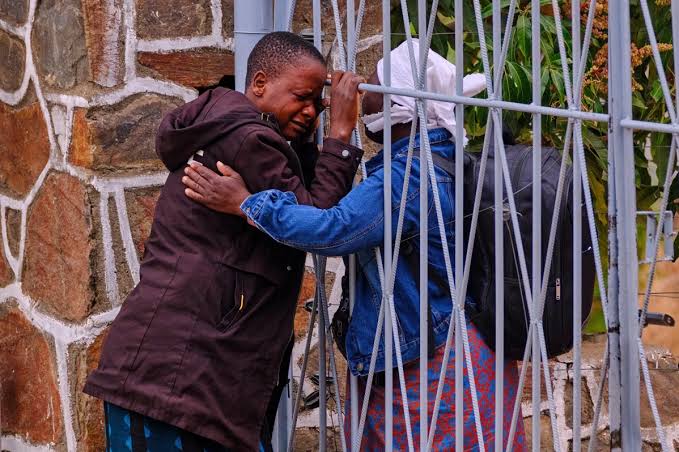
For families waiting for their loved ones to return home, the accident has therefore become more than another statistic in Zimbabwe’s growing road-safety crisis.
It is a night of unanswered telephone calls, hospital visits, identification of bodies and families being forced to confront the possibility that a journey that began as an ordinary trip to a church gathering ended in tragedy.
The accident has also come at an especially painful moment for the country.
Zimbabwe is still grappling with the shock surrounding the Lake Kariba disaster, in which scores of people were killed after a passenger vessel capsized.
The proximity of the two tragedies has intensified public concern about whether Zimbabwe is witnessing a broader deterioration in safety standards across different forms of passenger transportation.
Road accidents, however, are not new to Zimbabwe.
Year after year, families continue to lose breadwinners, children, parents and relatives in crashes that are often attributed to familiar causes, speeding, reckless driving, dangerous overtaking, fatigue, poor road conditions, defective vehicles, night driving and overloading.
The Chivhu tragedy has once again placed human error at the centre of the national conversation.
Yet the bigger question is whether human error should continue to be accepted as the final explanation for deaths that occur under circumstances that can, in many cases, be prevented.
A driver may make a mistake, but systems are supposed to exist to prevent one mistake from becoming a mass-casualty event.
That is where questions of enforcement, vehicle fitness, driver competence, passenger capacity, road engineering, emergency response and insurance become critical.
Dr Chidziva told this publication that Zimbabwe’s roads are increasingly carrying a complicated mix of private vehicles, buses, commuter omnibuses, informal taxis, haulage trucks and other forms of commercial transport.
“The growth of informal and private passenger transport has been driven partly by the failure of conventional public transport systems to adequately meet demand. For thousands of Zimbabweans, particularly workers and students travelling between towns and rural communities, private taxis and commuter omnibuses have become essential lifelines, the reality is that many people cannot afford to wait for formal public transport,” he said.
He further highlighted, they need to get to work. They need to get home. They need to attend school, church, markets and hospitals. That dependence has created an enormous transport economy, but it has also created enforcement challenges. Some operators work with ageing vehicles. Others operate with little financial capacity to maintain their vehicles properly. Some vehicles carry more passengers than they were designed to accommodate.
“And on major highways, drivers often compete for passengers and time, creating an environment in which overtaking, speeding and long-distance night driving can become deadly,” added Chidziva.
Police have repeatedly identified dangerous overtaking, overloading, night driving and reckless behaviour among the major contributors to road accidents.
The Chivhu crash appears to contain several of those concerns, although investigations will ultimately determine the precise circumstances surrounding the collision.
But even as the country waits for those findings, another issue deserves greater attention, insurance.
For families who lose relatives in road accidents, grief is only the beginning. There may be funeral expenses, hospital bills, loss of household income, school fees and the sudden disappearance of a family’s primary source of financial support. This is where passenger liability insurance becomes particularly important.
The Insurance and Pensions Commission (IPEC) has previously raised concerns surrounding insurance compliance within the passenger transport sector, including the extent to which operators have appropriate passenger liability protection.
The existence of insurance does not prevent an accident. It does, however, provide an important financial safety net when tragedy occurs.
The question now confronting authorities and the insurance industry is whether passengers travelling in commuter omnibuses and other informal transport vehicles are adequately protected before they board.
A passenger should not have to understand the technicalities of an insurance policy before entering a vehicle.
The responsibility should rest with operators, regulators and enforcement agencies to ensure that vehicles carrying members of the public comply with the law and maintain the necessary protection.
The Post understands that IPEC has been engaging the Zimbabwe Republic Police as part of efforts to strengthen enforcement and improve compliance within the transport sector.
But the scale of the challenge suggests that enforcement cannot be left to occasional roadblocks or investigations after fatal crashes.
It has to become a continuous system, vehicles should be inspected, operators should be held accountable, rivers should be monitored insurance compliance should be verifiable, overloading should attract meaningful consequences, and dangerous driving should be treated as a public-safety threat rather than simply another traffic offence.
The growing dependence on private taxis and informal passenger transport also presents another layer of complexity.
Zimbabwe’s poorly remunerated workers, including public-sector employees, increasingly depend on informal transport operators to navigate an inadequate public transport system.
In many communities, private taxis have effectively become the transport infrastructure of last resort. The irony is difficult to ignore.
The same informal transport networks filling gaps left by inadequate public transport can also become difficult for authorities to regulate effectively. The result is a dangerous grey area in which demand is high, passengers are desperate to travel and operators are under pressure to make money, safety can easily become secondary.
Every major accident generates familiar statements of sorrow, investigations and calls for motorists to exercise caution. But if the same causes continue producing the same consequences, then the problem is no longer simply individual recklessness, it becomes a systemic failure.
Legislator, Edwin Mushoriwa said the deaths near Chivhu should therefore force the country to look beyond the immediate circumstances of one collision and confront the broader weaknesses within the transport ecosystem.
“Zimbabwe needs safer roads, but it also needs safer vehicles, accountable operators, competent drivers, stronger enforcement and meaningful insurance protection,” said Mushoriwa
The families who lost their loved ones on Friday night will never recover what was taken from them, but the country can ensure that their deaths are not reduced to another entry in an ever-growing list of road fatalities. Twenty-seven people boarded a commuter omnibus to travel to a church conference, they never arrived.
“Behind those numbers are families, communities, churches, workplaces and children whose lives have now been permanently altered. Zimbabwe owes those families more than condolences, it owes them answers, and, most importantly, a transport system in which an ordinary journey does not become a gamble with death,” said Chikanga MP, Lynette Karenyi-Kore.


More Stories
Marital Feud Escalates Into Gun Drama in Rusape
AHF calls for African countries to unite against debt crisis
Pensioners Left Waiting As Billions Sit In Zimbabwe’s Pension Funds