


By Staff Reporter
This year’s Independence Day arrives at a defining and deeply reflective moment in Zimbabwe’s history, a time when the nation finds itself at a democratic crossroads, grappling with the very principles upon which its freedom was founded. What should ordinarily be a celebration of sovereignty, unity and hard-won independence is instead unfolding against a backdrop of political tension, constitutional contestation and growing public unease.
For many Zimbabweans, the commemoration evokes not only pride, but also difficult questions about the state of the nation. The liberation struggle, waged with immense sacrifice by thousands of men and women, was anchored on the promise of freedom, dignity, equality and the right of citizens to determine their own destiny. It was a fight against repression, against exclusion, and against a system that denied the majority their voice. Yet today, critics argue that some of these same freedoms appear increasingly under strain.
The governing party, ZANU PF, once at the forefront of that liberation struggle, now finds itself accused by sections of society of perpetuating practices reminiscent of the very system it helped dismantle. Allegations of violence, intimidation and manipulation have once again surfaced, particularly in the wake of controversial parliamentary consultations on Constitutional Amendment Bill No. 3. While authorities have pointed fingers at citizens and opposition voices as instigators of unrest, observers and civil society groups contend that the environment has been marked by intolerance and suppression of dissent.
For nearly three decades, Zimbabwe’s political landscape has been punctuated by reports of abductions, arrests and violence targeting individuals perceived to hold opposing views. For those who lived through the liberation war, the parallels drawn between current events and the colonial era under Ian Smith carry a particularly heavy weight. The liberation war itself was fought to dismantle such a system, to secure not just political independence, but also the fundamental rights of citizens, including the right to vote freely and choose leaders without fear.
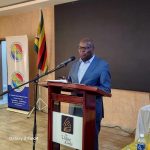
It is against this complex and often painful backdrop that voices such as Andreas Ethan Mathibela, Chairman of the Zimbabwe National Liberation War Veterans Association, have called for a moment of national introspection. In a statement marking Independence Day, Mathibela urged Zimbabweans to reflect deeply on the meaning of the freedom that was attained through blood, sacrifice and unity.
“Independence was not merely the lowering of one flag and the raising of another,” he noted. “It was a solemn promise to build a nation grounded in justice, equality and respect for the will of the people.”
However, he warned that the country now stands in the midst of a constitutional crisis, where the supreme law, the Constitution, risks being undermined by processes that many believe lack transparency and inclusivity. For Mathibela and others, any attempt to alter the Constitution without broad-based consent represents a departure from the ideals of the liberation struggle.
Adding to the sense of disillusionment is what has been described as the growing marginalization of war veterans themselves. Once revered as the custodians of Zimbabwe’s freedom, many former fighters now feel sidelined from national discourse and decision-making processes. Their exclusion, critics argue, not only diminishes their historical role but also raises broader concerns about the direction of governance in the country.
“The liberation struggle was never about individual enrichment or the concentration of power,” Mathibela emphasized. “It was about restoring land, dignity and self-determination to the people.”
This sentiment resonates with a wider section of society that increasingly views independence as more than a symbolic event marked by speeches and celebrations. For them, true independence must be reflected in accountable leadership, respect for constitutionalism and the protection of citizens’ rights.
As Zimbabwe marks another year of independence, the contrast between past aspirations and present realities is difficult to ignore. The question confronting the nation is not only how far it has come, but also how faithfully it has upheld the values that defined its liberation.
In this moment of reflection, the call is not to abandon the spirit of independence, but to reclaim and realign it. To ensure that the Constitution remains a living document that protects all citizens. To honour war veterans not just in word, but in action. And to reaffirm the principle that Zimbabwe belongs to all its people.


More Stories
Retrenchment Axe Hangs Over TelOne
Printflow Showcases Total Printing And ICT Solutions At Sanganai/Hlanganani Expo
Youth Take Lead in Fight Against Gender-Based Violence